 Kinyarwanda
 Oshiwambo
 Tagalog
 Punjabi

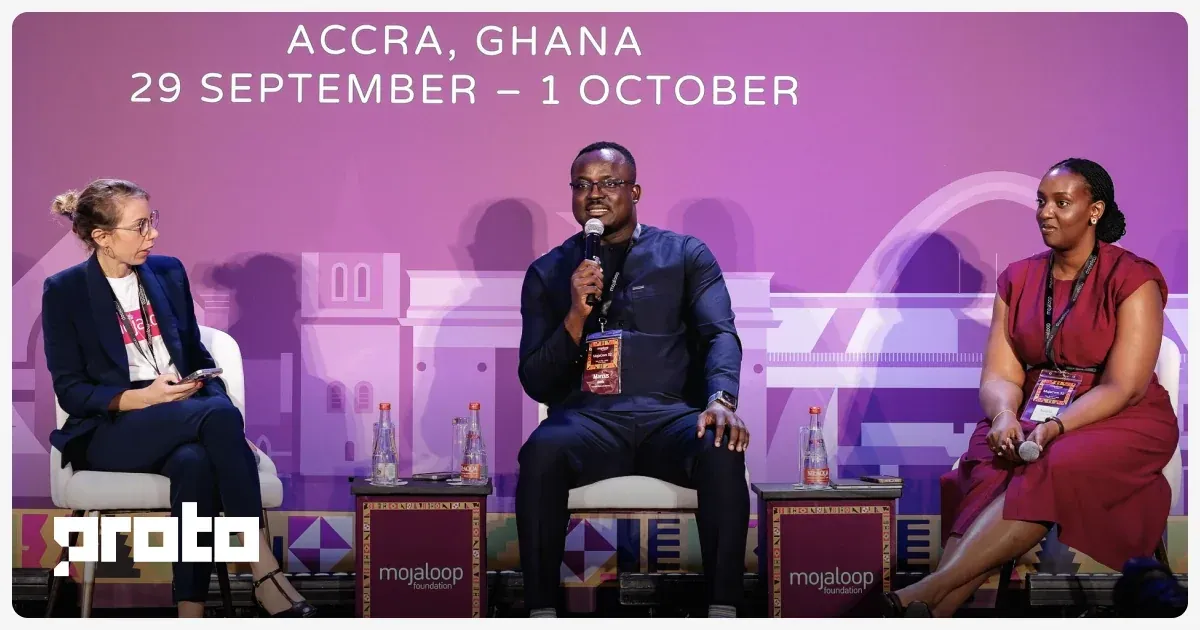
Proto’s Noella Dushime joined industry peers this week at MojaCom 32 in Accra, Ghana. She spoke on a panel about managing customer disputes, as part of a wider conversation on building accountable, inclusive instant payment systems. Noella is Proto’s Head of Global Partnerships.
MojaCom 32 is organised as part of the Mojaloop Foundation’s programme. It ran from 29 September to 1 October, and brought together central banks, payment switches, and partners working on interoperable, inclusive payment infrastructure across emerging markets.
Why consumer protection needs to grow alongside instant payments
“Payments may settle in seconds, but resolving a customer’s concern takes coordination,” Noella told the panel. Customers need a simple way to report a problem. They need a case reference, timely updates, and a clear answer through one accountable point of contact – regardless of how quickly the payment itself clears.
The stakes are significant. Mobile money alone processed more than $2 trillion globally in 2025, according to GSMA. The World Bank estimates that 79% of adults worldwide had a financial account in 2024, up from 51% in 2011. As access grows, the ability to get help when something goes wrong has to grow with it. Proto has made this point before: redress needs to be built into digital public infrastructure like instant payments from the start, not retrofitted once a backlog has formed. Proto sets out the full design in its blueprint for redress and fund recovery in digital public infrastructure, co-authored with FNA.
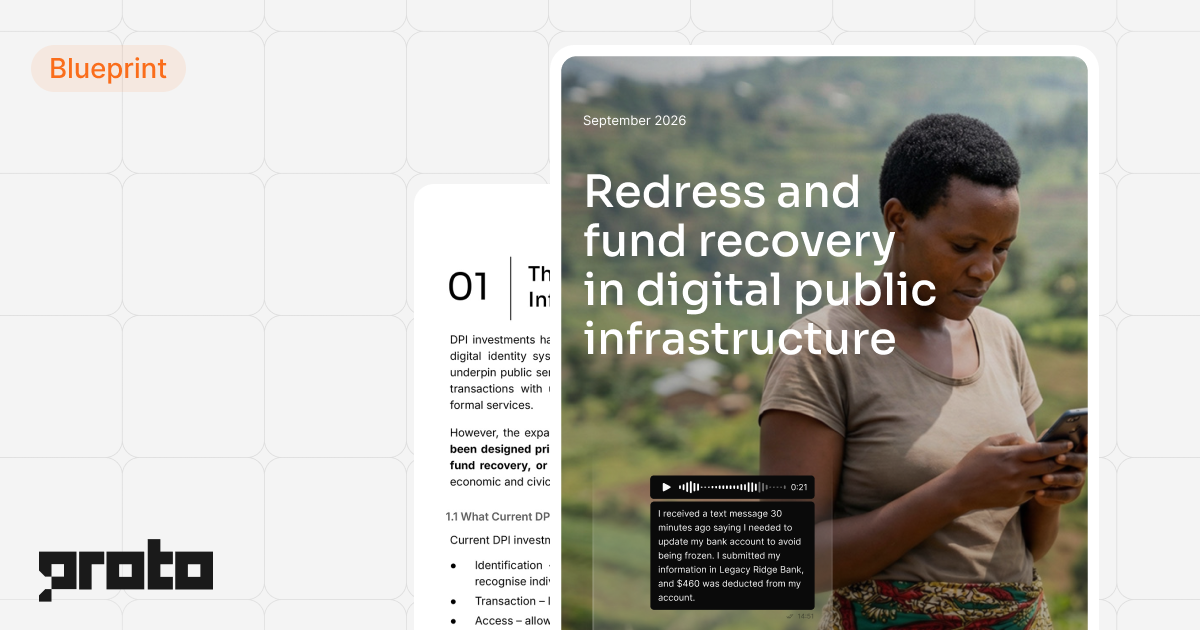
Discover the design thinking behind the trust layer
Six instruments for stakeholder coordination, sustainability planning and instant payment integrations.


What the panel covered
The discussion set out what effective dispute resolution requires from day one:
- Shared case categories, defined responsibilities, and clear response and escalation timelines, backed by an audit trail
- A regulatory role in setting clear policies and accountability mechanisms, so providers meet their obligations, recurring problems get addressed, and cases are resolved fairly
- AI supporting routine tasks such as intake, transaction matching and routing, while people stay responsible for complex or contested decisions
This last point mirrors Proto’s own Mediation feature.
Noella pointed to Proto’s own experience with the National Bank of Rwanda. Since launching its AI agent Intumwa, the bank’s average complaint-resolution time has fallen from roughly 35 days to 4. It’s a different kind of case to a cross-border instant payment dispute. But the underlying point held: a good back-office process alone isn’t enough if the channel doesn’t reach people in the first place.
Noella noted that these practical lessons are feeding directly into the Mojaloop Foundation’s new dispute-resolution workstream and guidance for adopters.
About the Mojaloop Foundation
The Mojaloop Foundation is a non-profit organisation. It maintains Mojaloop, open-source software built as a reference model for inclusive, interoperable instant payment systems. Its members include central banks, payment switches, and technology and development organisations working to extend digital financial services to underserved markets.